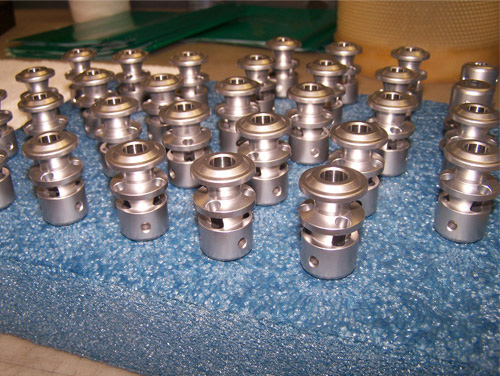
Passivation of Surgical Device Components
A client from the medical industry contacted IFT Worldwide for passivation of surgical device components. In order to meet industry required standards for cleanliness, our process engineers developed a cleaning and passivation process that exceeds the medical industry requirements. This passivation process was a chemical-cleaning and controlled-oxidizing procedure that removed free-iron, metallic, and non-metallic contaminants remaining on the surface of the part after manufacturing. By oxidizing these components, a beneficial layer formed that increased the corrosion resistance of the stainless steel alloys and made the components suitable for use in sterile medical applications, meeting industry requirements. We also met ASTM A380, AMS QQ-P-35, ASTM A967, and AMS 2700 standards.
All passivated components underwent thorough testing that included humidity, salt spray, water immersion, and copper sulfate testing to ensure that the components met the needs of the client and the industry. The table below outlines this chemical passivation of surgical device components project. If you would like additional information, please contact us today.
Highlights:
Passivation of Surgical Device Components Project
- Project Description
- Surgical Device Components
- Capabilities Applied/Processes
- Passivation of Stainless Steel
- IFT’s client, a global medical device manufacturer had issues getting components to meet required industry standards for cleanliness and passivity.
- IFT’s process engineers developed a precision cleaning and chemical Passivation treatment which enables these surgical components to meet or exceed medical industry requirements for cleanliness
- Material of Part
- Stainless Steel Alloys
- Materials of Coating
- (Not a coating, it is a chemical cleaning and controlled oxidizing process)
- Benefits of Coating
- Removes “free-iron” and other metallic and non-metallic contaminants resulting from manufacturing processes from the surface of the part
- Forms a beneficial oxide layer on the surface of the component
- Facilitates the formation of a “Passive” layer at the surface of the component
- Enhances corrosion resistance of Stainless Steel alloys
- Makes components suitable for use in sterile medical applications
- In process testing/inspection performed
- Humidity Testing
- Salt Spray Testing
- Water Immersion Testing
- Copper Sulfate testing
- Industry for Use
- Medical / Surgical
- Standards Met
- ASTM A380
- AMS QQ-P-35
- ASTM A967
- AMS 2700
- Product Name
- Surgical Device Components
